


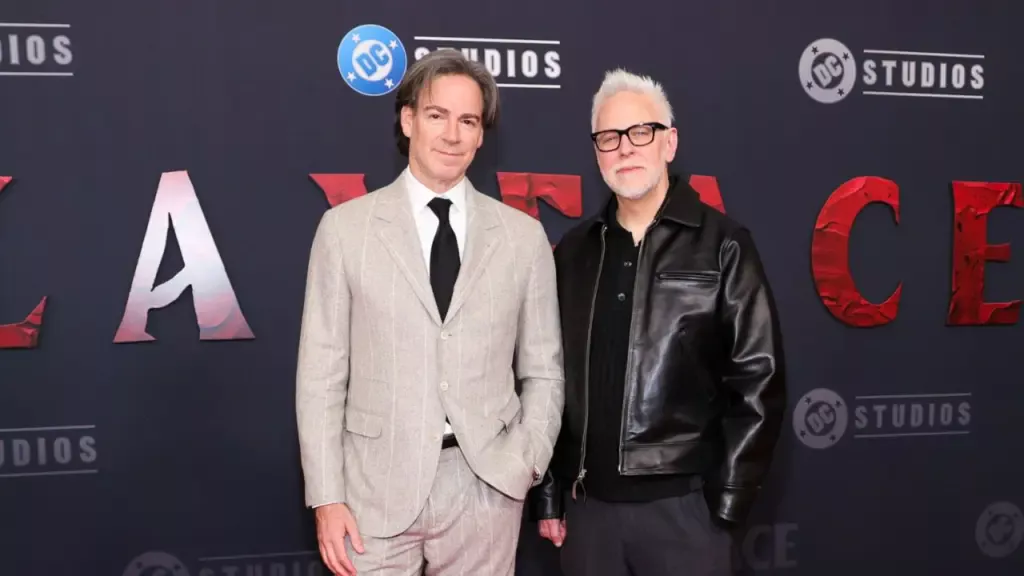
The future of the DC cinematic universe has taken another unexpected turn. After four years leading DC Studios, James Gunn and Peter Safran are stepping down from their leadership positions, making way for a new administration headed by Jeremy Latcham, an executive with significant experience at Marvel Studios. Announced by Skydance on November 9, 2026, the change marks another major shift in the recent history of DC Comics adaptations.
Although several productions received positive reviews, Gunn's leadership also faced commercial difficulties, controversial creative decisions, and questions about the development of a consistent cinematic universe. Now, the arrival of new leadership raises an important question: will DC continue with its current plans, or undergo another major restructuring?
James Gunn leaves DC leadership: who will replace him?
James Gunn and Peter Safran took over DC Studios in 2022, with the mission of reorganizing Warner Bros. productions and establishing a new shared universe. However, following Skydance's acquisition of Warner Bros. Discovery, an administrative restructuring brought the duo's leadership to an end.
Starting December 1, 2026, Jeremy Latcham will take over as president and creative head of DC Studios. The executive has worked on major Marvel productions, including Iron Man, The Avengers, and Guardians of the Galaxy, experience that could help reorganize the franchise.
Gunn and Safran, meanwhile, will return to creative work. This does not necessarily mean a complete departure from DC: Gunn remains involved in Man of Tomorrow, the sequel to Superman, scheduled for 2027, as well as other projects.
Box office results and creative decisions: what may have contributed to the change?
Although Skydance has not cited box office performance as the official reason for the leadership change, inconsistent commercial results represent one of the main challenges faced by the previous administration.
- Superman (2025): approximately $618.7 million worldwide.
- Supergirl (2026): approximately $126.5 million, against an estimated production budget of $170 million.
- Clayface (2026): approximately $109 million worldwide, with an estimated budget of $40 million.
Supergirl's performance was particularly concerning, demonstrating that the success of Superman would not be enough to guarantee audience interest in every project within the new franchise. Clayface, on the other hand, achieved more favorable numbers relative to its budget, but its performance alone does not represent a commercial recovery for DC.
Beyond box office results, another problem continues to affect the publisher's adaptations: the loss of character identity. This issue did not begin with Gunn, but it was not resolved during his leadership either.
The risk of changing characters beyond recognition
DC's different administrations have presented very different creative visions, but both the Zack Snyder era and James Gunn's leadership included decisions that divided fans and significantly changed characters familiar to comic book readers.
Productions such as Lanterns raise questions about this approach. The idea of a police investigation could work very well, but the characterization of John Stewart, traditionally disciplined and responsible, and Hal Jordan, portrayed with traits that resemble a superhero satire in the style of The Boys, risks distancing both protagonists from their established identities.
Another example is Supergirl, which uses Kara's alcoholism and self-destructive behavior as important elements of her portrayal. Although the approach draws inspiration from the comic book Woman of Tomorrow, some adaptation choices significantly alter the original story's message.
The problem is that these changes do not affect the films individually alone. When personalities, values, and fundamental characteristics are constantly altered, building a cohesive cinematic universe becomes increasingly difficult. This was one of the challenges of Snyder's previous continuity, and it remains a concern for the new DC universe.
Will Jeremy Latcham keep James Gunn's universe or launch another reboot?
This is probably the biggest question surrounding the new administration. Jeremy Latcham will be responsible for deciding which projects continue and what creative direction the franchise will take.
One possibility would be to keep the current cast and preserve the existing continuity, making only adjustments to the overall plan. This approach would allow DC to retain well-received casting choices, such as David Corenswet as Superman and other characters already introduced, without forcing the studio to start from scratch.
Another possibility would be a partial or complete reboot, changing characters, stories, and connections established during the previous administration. However, another major restructuring so soon after the last one could further damage audience confidence in the franchise's continuity.
There is also an intermediate strategy: preserve the characters and actors who have been best received while establishing a new narrative direction, with greater attention to character identity and connections between films.
Conclusion: a new opportunity for DC
The departure of James Gunn and Peter Safran represents another chapter of instability for DC Studios. Although the duo managed to deliver some notable productions, inconsistent box office results and creative controversies show that significant challenges remain before the franchise can establish itself.
Jeremy Latcham's experience at Marvel could contribute to a more efficient organizational structure, but DC does not need to simply reproduce the formula of its main competitor. Its characters have their own identities and the potential to explore different cinematic genres.
The ideal approach would be to build on the successes of previous administrations, preserve strong casting choices, and correct continuity and characterization problems. However, it is still too early to know whether this will be the chosen direction or whether Skydance intends to launch another major restructuring.
Do you think Jeremy Latcham should keep James Gunn's universe, preserve the best casting choices, or start over with a complete DC reboot?

Nenhum comentário:
Postar um comentário